Top Strategies for e-Commerce Success: Proven Tactics to Boost Online Sales

Strategies for e-Commerce Success
Pinterest Hidden Image

It can be a daunting prospect to unleash your e-commerce website on the world, especially after putting so much time and effort into it. There are different things you should consider using as a part of your eCommerce strategies so that your eCommerce website doesn’t flop.

Here are some important strategies to get you started:

📖 Key takeaways

  • Most eCommerce businesses fail to attract and retain customers with their strategies and end up with poor sales and no growth.
  • Without an online presence, a clear value proposition, and effective marketing, your eCommerce site will get lost in the noise. This means wasted effort, lost revenue, and missed opportunities to scale your business.
  • A solid eCommerce strategy with a strong value proposition, targeted marketing, and data-driven optimization will boost your online sales. Focus on customer needs, optimize for SEO, and use social media to drive traffic, conversions, and growth.

1. Build a Strong Online Store

To succeed in today’s market of eCommerce businesses, you must build a strong base, a foundation that is your eCommerce store. These foundational things are based on three important elements: value proposition, knowledge about your target audience, and using best SEO practices.

Learn as Much as Possible About Your Ideal Buyer

Target Audience VS Target Market

To create a successful e-commerce business, it is really important to develop a customer-centric approach. To achieve this, you must ensure that your compelling UVP is rooted in a deep understanding of your target audience and their needs.

You can use surveys, interviews, and customer data analysis to gain insights into what your audience values most. This will allow you to easily identify different segments within your audience based on demographics, behavior, and preferences. Tailor your UVP to address the specific needs of each segment.

Now, you can create detailed personas representing your ideal customers. Use these personas to guide the tone and content of your UVP.

Buyer Personas Example

Next, you design every point of the customer journey map, or what your customers need on every channel and at every stage of their buying process. Your customer journey map will help you to know where to focus your efforts.

Customers Pain Points

Develop Your Unique Value Proposition (UVP)

Before anything else you take about your ecommerce brand, you must think about creating a unique value proposition (UVP). It is really important to differentiate your e-commerce business from the rest of the market.

A well-defined UVP must communicate the unique benefits of your offerings for potential customers. It must also resonate with your target market and serve as a cornerstone for your marketing strategy.

Here’s how to develop a compelling UVP for your e-commerce business:

  1. First, analyze your e-commerce business’s core competencies. What do you do better than others? It could be anything, such as exclusive products, superior customer service, quick delivery, innovative technology, or competitive pricing.
  2. Next, when you know your strengths, you must clearly state the benefits customers will receive. Avoid generic claims and focus on specific advantages that solve customer problems or improve their lives. For example, if it is quick delivery, you can state, “Don’t wait days to get the product you have paid for; we guarantee that you will get it in less than 48 hours.”
  3. The third thing you must do is to clearly emphasize what sets you apart. As you can see, many things I covered in previous steps are also part of your competition, so you must think about some unique product feature, a distinctive brand story, or an exceptional shopping experience.
  4. The last thing that you must never underestimate is to keep your UVP simple. Nobody wants to think what you want to say. So, ensure your UVP is concise and easy to understand. A clear and straightforward message will resonate more effectively with your audience.

Optimize your Online Store for Search Engine Optimization (SEO)

To build a strong e-commerce store, you must ensure your website implements some important SEO techniques to optimize your UVP for search engines to reach a broader audience.

First, you must identify keywords and phrases your target audience uses when searching for products similar to yours and then incorporate these keywords naturally into your UVP.

When you incorporate the keywords, you must ensure that you place your UVP prominently on key pages like the homepage, product pages, and about us page. Use heading tags (H1, H2) to highlight your UVP and improve search engine readability.

Also, you can include your UVP in meta descriptions and title tags to improve click-through rates from search engine results.

One important thing that can help you build a successful ecommerce business is to create blog posts, articles, and other content that will showcase and support your UVP. This will not only drive traffic to your ecommerce platform but also establish your authority and relevance in your industry.

2. Develop Your eCommerce Business Model

eCommerce model

When starting an eCommerce business, it’s important to develop a solid business model. This will serve as the foundation for your operations and help you make informed decisions about your products, pricing, marketing strategies, and more.

You can have a business-to-customer (B2C) model similar to a traditional brick-and-mortar store or a wholesale model similar to a traditional wholesale business. The main difference is that you are using your e-commerce platform to sell.

The white-label selling model is also gaining popularity. In this model, you sell products under your own brand, but another company produces them. This method allows you to focus on marketing and branding while leaving the production and fulfillment to a third party.

One popular eCommerce model is the dropshipping method. With this approach, you don’t need to keep inventory or handle product fulfillment. Instead, you partner with a supplier who will handle those aspects on your behalf.

A subscription model is where customers pay a recurring fee for access to products or services. This model is popular in industries such as beauty, food, lifestyle, and selling services online.

Another option is to create your own products and sell them directly through your eCommerce platform. This allows for more control over the quality and branding of your products but also requires more investment in terms of production and storage.

Whichever route you choose, it’s important to conduct thorough market research to understand your target audience, their buying habits, and competitors in your niche.

3. Develop Your eCommerce Marketing Strategy

eCommerce companies can not succeed without a strong marketing strategy. How can you expect to have eCommerce sales without customers who will first be visitors to your eCommerce store? Even though you can use different eCommerce strategies, the most effective ones are social media marketing, loyalty programs, email marketing, and blogging.

Don’t Overestimate the Power of Social Media Marketing

Incorporating social media into your eCommerce strategy is a must without negotiation.

Social media platforms can significantly help your eCommerce business reach new customers, engage with current customers, and increase visibility. However, you must use a strategic approach through a well-thought-out plan.

Related: Increase Your Brand Potential: How to Measure and Strategies

First, you must identify the most popular platforms among your targeted customers. For example, Instagram and Pinterest are highly visual platforms that are ideal for showcasing products, while LinkedIn might be more suitable for B2B marketing.

Also, you must ensure that your social media posts’ brand identity (voice, visuals, and messaging) and brand values are consistent across all chosen channels. This consistency will help you to build a recognizable and trustworthy eCommerce brand.

brand equity

Related: How to Build a Strong Brand Strategy: Essentials for Long-Term Success

Additionally, you can also use advertising to target specific demographics, interests, and behaviors. This ensures your ads reach prospective customers with the right purchase intent who are more likely to convert into customers and then loyal brand ambassadors.

So, start with the creation of a social media marketing strategy that aligns with your overall business goals and can bring you measurable results. To do so, you must set objectives or define what you want to achieve with your efforts, such as increasing website traffic, increasing eCommerce sales, or growing your follower base.

Plan your posts ahead of time using a content calendar. This will help you to maintain consistency and ensure you cover all relevant topics and events.

Also, ensure that your strategy includes using influencer marketing and user-generated content (UGC) because today, many e-commerce brands use these powerful tools to improve their credibility and drive engagement.

Develop and Implement a Customer Loyalty Program

A well-designed customer loyalty program can be a game-changer for your ecommerce business. It not only helps ecommerce brands retain existing customers and reward repeat customers but also leads to increased revenue and brand loyalty.

To retain existing customers and encourage repeat business, you must establish a clear structure for your program. Respond to these questions if you want to develop a strong program for loyalty:

  • What do you want to achieve with the program? Is it repeat purchase or increasing average order value? Or is it improving customer retention rates?
  • What type of program will you use? For example, you can use a point-based system where each purchase will bring to your customers points based on order value. You can also use tiered programs where participants will get different rewards based on engagement level or how much they spend with your company. Also, you can use membership programs such as VIP eCommerce sales events or priority customer service. What is important is that you must adjust the rewards to match the preferences of your customer base.
  • How can you integrate the program with your existing e-commerce platform? Because you are an ecommerce business, you must ensure that the technology you will use can be easily integrated with your ecommerce platform.

Remember that you must ensure the program is easy to understand and use. I really don’t like the programs if I need to spend half a day understanding what I need to do and how. A complicated system can deter participation.

When you develop your program, you can promote it through email marketing for your current customers and social media to attract customers.

Email Marketing

Design Email Marketing Campaigns

Email marketing remains one of the most effective tools for nurturing leads and driving conversions for eCommerce brands. Creating targeted, personalized email campaigns in combination with SMS marketing allows you to engage and encourage customers at different points in their customer journeys and turn prospects into loyal customers.

If you have not yet collected emails, you must integrate subscription forms on your website to reach customers. You already have the emails of your current customers. Using this database, you can divide your email list into segments based on behavior, purchase history, demographics, and engagement levels. Remember that you want to adjust your messages to specific segments to increase the relevance and effectiveness of your campaigns.

Email automation allows you to send timely, relevant messages to your audience without manual intervention. For example, you can send an after-purchase email to thank your customers, ensure a smooth customer experience, and offer them some upselling options or coupon codes for their next purchases.

Read our article about how to design a successful email marketing campaign and there you can find types of emails and templates you can use to design different automated email sequences.

eCommerce Blogging

I think that no online business can survive without using blogging as part of its strategy to bring visitors to its website. Blogging, or content marketing like writing articles, recording videos, podcasting, etc., is still the most effective eCommerce strategy. I even know a traditional retail store that uses blogs to reach and educate customers.

The biggest question I’ve been asked in the past is about what I can blog about. The answer is simple: blog about your products, services, and industry. But don’t just make it a sales pitch. Instead, provide valuable information and insights related to your offerings that will engage and educate your audience. This can include tips for using the products you sell, customer success stories to leverage social proof, industry news, and trends to present your eCommerce business as a leader, or even behind-the-scenes looks at your business.

Another key aspect of blogging for eCommerce is optimizing your content for search engines. By strategically using keywords in your blog posts, you can increase the chances of attracting potential customers through organic searches. Additionally, regularly updating your blog with fresh content can also improve your website’s overall search engine ranking.

But blogging isn’t just about drawing in new customers; it’s also crucial for retaining them. By consistently providing valuable and informative content, you can keep your customers engaged and coming back to your eCommerce site for more. Plus, sharing your blog posts on social media can also help drive traffic to your website and increase brand visibility.

Related: 100+ Blog Post Ideas for Your Small Business Blog

4. Optimize the Shopping Experience

Optimized shopping experience is important when it comes to attracting and converting online shoppers. There are many different ecommerce strategies you can use to optimize shopping experience and boost sales, but two of them are the most important: site navigation and A/B testing.

Site Navigation

Optimizing your ecommerce website’s navigation is key to improving the customer experience and conversions. A good navigation system means customers can find what they’re looking for and are happy and more likely to buy.

To improve the overall customer experience, focus on an intuitive and efficient navigation structure:

  1. Clear Category Hierarchy: Organise your products into clear, logical categories and subcategories. Make sure each category is accessible from the main menu.
  2. Descriptive Labels: Use plain and descriptive labels for your navigation links. Avoid jargon and make sure each label matches what’s behind the link.
  3. Consistent Layout: Keep the navigation layout the same across all pages. Consistency helps users get to know your site’s structure and makes it easier to navigate.
  4. Sticky Navigation: Consider a sticky navigation bar that stays at the top of the screen as users scroll. Keeps essential links always in sight.

A simple interface helps customers find what they’re looking for:

  1. Search Functionality: Have a robust search with autocomplete and filtering. Users can refine their search results and find what they need faster.
  2. Breadcrumbs: Use breadcrumb navigation to show users where they are in the site’s hierarchy. Breadcrumbs help users see where they’ve been and easily go back.
  3. Filters and Sorting: Have filters and sorting on category pages. Allow users to narrow down their choices by price, size, color, popularity, etc.
  4. Quick Links: Highlight popular categories, new arrivals, and best-sellers in prominent areas of the homepage. Quick links can guide users to high-interest areas of your site.

A/B Testing to Test Your Website’s Design and Layout

A/B Testing

A/B testing is a way to find the best design and layout for the customer experience and maximum conversions. It’s a testing method where you’ll use two different web pages with different elements you want to test, such as color, copy, menu layout, link labels, and search bar placement. When you create these pages, you’ll need to send traffic to them to collect enough data on their performance against conversions.

Once you have enough data, use it to analyze user behavior and conversion rates. See which variations win and why.

Based on the results, roll out the winning variations sitewide. Monitor and be ready to adjust again.

Don’t Forget About Mobile eCommerce Website

Chances are, you or your developer has designed your website on a PC, laptop, or Mac, and while it looks great on a big screen, does it work for mobile? This doesn’t just mean making your website mobile-friendly. Sometimes, you may have to change the whole design to read correctly, and all falls into place on the smaller screen of a mobile phone.

It’s also helpful to build a progressive web application (PWA) for your eCommerce store. Progressive web application combines the best of both native mobile apps and websites, giving your users a fast and engaging experience.

Efficiency is everything

A website that loads instantly and works well will do far better than an over-the-top website that is difficult to navigate and slow to load. This is something you will have to consider when looking for a domain for your website. But when it comes to storing data for your website, it’s a good idea to consider a cloud-based hosting provider to reduce the impact of big data centers on the environment and enjoy a cheaper service that offers more storage.

Did you know that the total number of these big data centers worldwide was almost 8.6 million in 2017? According to Statista, in 2021, there will be 7.2 million data centers worldwide.
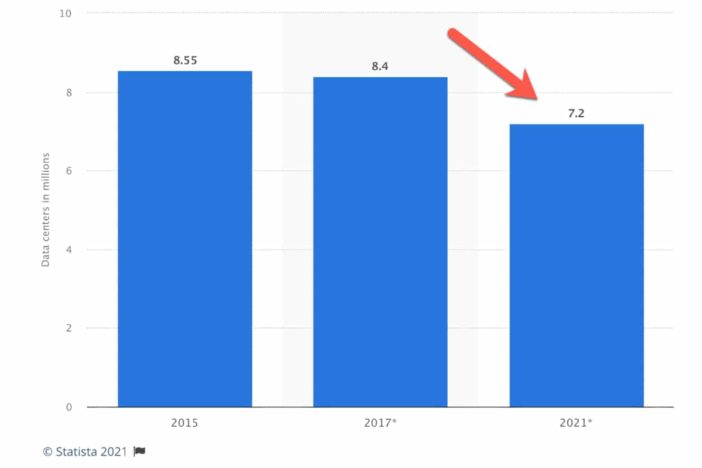
data centers worldwide - statista

Ask for feedback

Don’t be afraid to ask visitors for website feedback when starting. It’s a great way to get an honest view of your work. Your customers are the people you want on your site, so if you please them, you can please most people. Ask for feedback on your website, customer service, and products. You could use a site survey, social media, or a follow-up email to strengthen your chances for eCommerce success. In addition, looking for a free online store website can help make your business more accessible and easy for the customers.

5. Drive Traffic and Increase Sales

Drive Traffic and Increase Sales

The next important thing for ecommerce business is the question related to how to drive traffic and, then, logically, sales.

Pay-Per-Click (PPC) Advertising

Pay-per-click (PPC) advertising is a powerful tool for driving targeted traffic to your e-commerce business’s websites. It allows you to reach your target customers at the right moment when they are actively searching for specific products or services like yours.

PPC advertising, especially through platforms like Google Ads, Bing Ads, Facebook Ads, etc., can significantly increase your visibility and attract high-intent visitors, which your website must take on for customer acquisition.

Here is an example of searching on Google for “Canon Camera.” You can see that before anything else, including the official Canon website, there are many advertisements from Canon itself, but also from different ecommerce businesses that sell cameras from Canon.

Google Ads - Search Canon

First, identify relevant keywords that your target customers will likely use when searching for products you sell. Tools like Google Keyword Planner can help you find high-volume, low-competition keywords.

Then, you can create compelling ad copy that highlights your unique value proposition. Ensure that your ads are clear and concise and include strong calls to action (CTAs). You can also use advanced targeting options available on PPC platforms, such as demographics, location, device type, and even time of day, to reach the most relevant audience.

Ensure that traffic is directed to optimized landing pages that align with your ad content. A seamless transition from ad to landing page improves customer experience and increases conversion rates.

Choose the Right Distribution and Sales Channels for Online Growth

Choosing the right distribution and sales channels is key to any eCommerce success. It requires a deep understanding of your target market and each channel’s characteristics.

Since you already know your audience and you have segmented it, you can now analyze the strengths and weaknesses of each distribution channel. These can be your own website, third-party marketplaces, social media platforms, and brick-and-mortar partnerships.

Related: Documents Required When Selling Online: Which 5 Will You Need to Prepare

When it comes to distribution channels, you need to consider logistics and fulfillment as well as reach and sales potential. When evaluating each channel, consider shipping costs, delivery times, and customer satisfaction rates.

Also, keep in mind that some distribution channels may appeal more to specific demographics or niche markets. For example, if your audience is mainly younger generations, you may want to focus on a specific social media channel for advertising and selling your products. If your audience is mainly visual-centric, platforms like Instagram and Pinterest might be perfect for showcasing your products.

On the other hand, if your target market is older individuals who prefer traditional shopping methods, partnering with brick-and-mortar stores might be the way to go.

Also, it will be good to incorporate into your ecommerce strategy a multi-channel distribution strategy allows you to reach new customers through various touchpoints.

6. Measure the Performance of Your eCommerce Strategies for Success and Growth

So, you have a good ecommerce strategy, and now you start with the implementation or execution process. But how will you know if your e-commerce strategy will bring you success?

If you want to solve this challenge, you must set clear goals and objectives and set all important KPIs in your ecommerce strategy.

Goals and Objectives

Setting goals and objectives in your eCommerce strategy is key to success for any eCommerce business. These will guide your ecommerce strategy, measure progress, and make sure all efforts are in line with your overall vision.

For example, you can have a goal to have 15% more returning customers at the end of 2024 compared to 2023. Then, you can use a data-driven approach to measure success and find growth opportunities

You can use Google Analytics, CRM systems, and ecommerce platforms to collect data such as traffic sources, user behavior, and sales trends. Then, you can analyze the data regularly to find patterns and trends. This will help you know what works and what doesn’t, so you can make informed decisions.

“The goal is to turn data into information, and information into insight.” – Carly Fiorina, former CEO of Hewlett-Packard

Key Performance Indicators (KPIs)

There is no eCommerce strategy that will bring you success without tracking the right KPIs. You can track KPIs such as:

  • Operational Metrics: Track inventory turnover, order fulfillment times, and return rates to make sure your operations run smoothly.
  • Sales Metrics: Track total sales, average order value (AOV), and conversion rates. These KPIs will give you a snapshot of your sales performance.
  • Customer Metrics: Monitor customer acquisition cost (CAC), customer lifetime value (CLV), and churn rate. This will help you manage your customer relationships.
  • Marketing Metrics: Measure the performance of your marketing campaigns by tracking CTR, Return on Ad Spend (ROAS), and social media engagement.