The popularity of social media sites grows each day when it comes to digital marketing. New players on the market complicate the situation for small businesses and what they need to use to be close to their customers. So, you and your small business need to develop a quality social media marketing strategy and implement it in the right way.
If you want to achieve a certain level of success, it is necessary to start implementing a strategic approach. You, as an entrepreneur, must have a social media strategy for your business because, without the strategy, all your efforts will be useless.
Let’s look at what you need to develop a great social media marketing strategy for your small business. But first, let’s explain what it is.
📖 Key takeaways
- Small businesses get overwhelmed with the number of social media platforms, each requiring different approaches and resources. Without a plan, efforts are disorganized, and time is wasted with minimal results.
- Not having a plan means missing out on key opportunities to talk to customers. If you post irregularly, on the wrong platforms, or fail to reach your target audience, you will have low visibility and engagement.
- To overcome these challenges, you need to develop a social media marketing strategy. That means identifying your audience, choosing the right platforms, creating the right content, tracking performance, and being consistent and visible online.
What is a Social Media Marketing Strategy?
The strategy is a plan of action that you must implement if you want to achieve your goals. For the implementation purpose, the strategy has more tactics. Each tactic will need to have activities with implementation dates, the responsible persons for the implementation, and the necessary budget for implementation.
But you already know that you have very different strategies. For example, you have a business strategy related to your overall business goals. Also, you can have a competitive strategy, pricing strategy, management strategy, etc. All of them can be part of your overall business strategy or some separate strategies related to specific topics or business functions. One thing is essential: all of these separate strategies will need to help you successfully implement your overall business strategy.
When it comes to social media strategy, it can be part of your overall business strategy or part of your marketing strategy, or a totally separate strategy. In most cases, this strategy of digital marketing is also used.
A social media marketing strategy is a plan that outlines how your business will use social media platforms to achieve its marketing goals. It includes defining target audiences, setting objectives, creating content, selecting the right platforms, engaging with followers, and measuring the effectiveness of campaigns to drive brand awareness, engagement, and conversions.

So, a social media marketing strategy will give you a clear route you need to take if you want to achieve your goals. Or specifically, social media presence goals.
I. Social Media Goals
The first step to developing your social media marketing strategy is to respond to the question: What do you want to achieve on social media channels? So, you must define your social media marketing goals, such as increasing brand awareness, driving website traffic, or generating leads.
These goals cannot be as tangible as other business goals, but they can be in the form of the following statements:
- Increasing brand awareness
- Generate traffic to the website
- Generate leads from social media pages
- Increase social selling
- Building a social presence on social media.
- Increasing the visibility of the brand.
- Generate leads and potential customers for your small business.
- Provide customer support for your customers.
- Educate current and potential customers, and so on.
This is only a fraction of the possible goals that a company can have for the effective use of social media. The strategy should provide a list of activities to achieve those goals that you’ve set. You must be aware of the availability of your resources, especially time.
II. Define Your Target Audience

Without knowing your target audience, all your efforts will be useless. So, before you start developing your strategy, you must identify your target audience and their needs in order to create a successful social media marketing strategy.
Learn the age group and general demographics. How much time does this group spend on social media? How do different individuals interact with different brands to which they are exposed? Also, how open are they to new products in the sector you are working in?
Always have those and similar questions answered and cleared out before you market anything to your preferred audience.
There are a number of tools to learn those specifics and adjust accordingly. For example, you can use social media analytics to learn more about your followers and their interactions with your brand.
Also, to better understand different audiences on social media, you can develop buyer personas to understand their demographics, psychographics, and geographic information.

Without a clear understanding and approach, your brand will get stuck in a very uncomfortable position, and it’s very likely that you will lose the trust of your target group.
Related: How to Get More Followers on Instagram: 19 Tips to Grow Your Real Audience
III. Competitive Analysis and Social Media Sites
Analyze Your Competitors on Social Media
Analyzing your competition on social media is key to a winning social strategy. By looking at their social media presence, content, and engagement, you can gain some helpful insights.
It would be great if you could answer the following three questions to analyze your competition on social media:
1. What platforms do they use?
Start by looking at the platforms they use and the type of content they post. What resonates with their audience—images, informative posts, or videos—and how can you apply that to your strategy?
2. What are the strengths and weaknesses of your competition on social media?
As you get deeper, take the time to evaluate the strengths and weaknesses of your competitor’s social media strategy.
For example, when I worked with a small e-commerce business, we noticed their main competitor was killing it with interactive content that encouraged user participation. This boosted their engagement rates and created a sense of community. By recognizing this opportunity, we added similar interactive elements to our client’s strategy and saw a big increase in audience engagement.
3. How does your competition perform on social media?
Understanding how your competition performs on social media can help you find best practices and areas for improvement within your own brand. You must find responses to the following questions:
- How often do they post?
- What are their engagement metrics?
- Are they consistent?
- Do they respond to comments and messages?
These can be your benchmark. Learn from their successes and failures, and you can refine your strategy and avoid common mistakes.
As you can see, analyzing your competition on social media isn’t just about keeping an eye on them; it’s about using their insights to improve your own social media marketing strategy.
Analyze and Select Social Media Channels for Your Strategy
Selecting the right social media platform will define the next steps in your social media marketing strategy.
For example, if you select Facebook and Twitter, you can use different content types like text status, image, video, or a combination of them. But, if you select TikTok, then you have one type of content – short videos. If you choose Instagram, you can share images and short videos. When it comes to YouTube, we will share short and longer videos.
Analyze Different Social Media
This point is based on how much you know your audience. Picking the right social network to target your audience is crucial for building a successful brand image. All social media channels have different styles and approaches, which means that your audience won’t get the same treatment on two separate platforms.
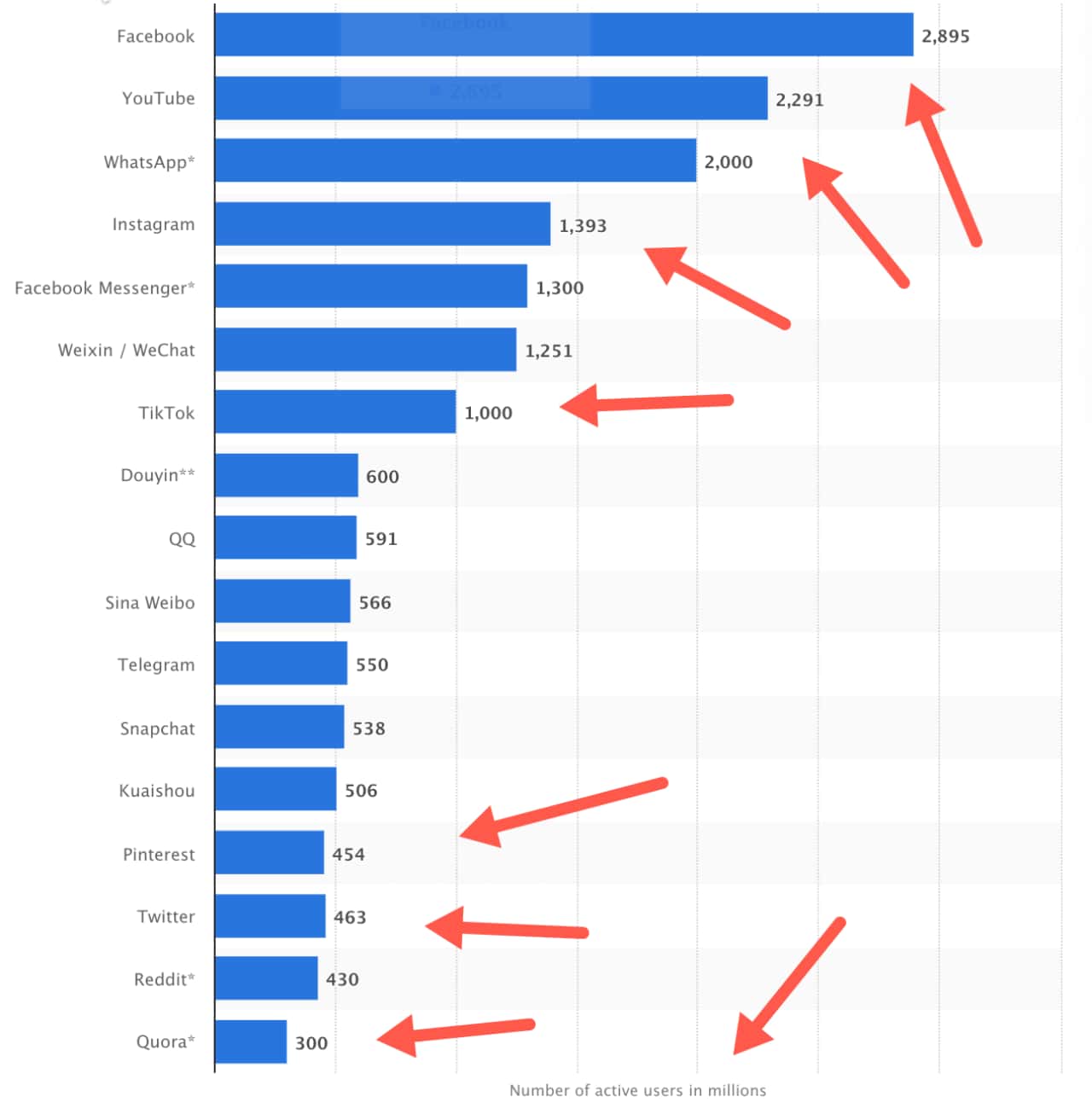
The first thing you want to check is the number of active users. I talk about active users because if the platform has a large base of users and they are not active, it will not bring you the results you want to achieve. Once you have the list of the most important social media platforms for your business, you will already know where to narrow your attention.
For example, Statista lists all social media ranked by the number of active users in a million.

The next thing you need to find is where your current and potential customers are. You can start playing on these platforms and check if there are some of your current customers.
Check your targeted customers and ensure they are on the platforms you want to select. You can also use surveys or interviews with your customers to research and find where they are and how much time they spend on those platforms. This is essential information for your social media marketing strategy.
If you are a startup company, or if this is your first social media strategy, you will need to do your research and experiment with different channels.
Select the Most Appropriate Platforms for Your Business and Customers.
Now, when you have collected and analyzed data, you can easily rank all analyzed social media sites to select the best for your company. You already collect data to respond to these questions:
- Goals that you have and want to achieve through your strategy.
- Type of business, company culture, market, and industry where your small business operates.
- You understand each social media platform’s unique features and audience demographics.
- Places and social media channels where your potential customers are.
- Where do your potential customers spend most of their time?
In most cases, you will select multiple platforms. This means, for example, you can select Facebook, X, Instagram, TikTok, and YouTube. In such a case, you can easily create different types of content and repurpose content for one or another platform.
Remember that when you create social media strategies, you want to ensure you have a systematic approach to everything you do.
You should also adjust your approach, knowing what each different style looks like. To put it simply, if you are approaching one platform with a well-rounded post or a story, you might approach another platform with a meme or a very short message. Adapting your style to the demands of different platform users is of vital importance.
You can see how the selection of platforms will design the content types you will cover in your social media strategy.
Related: How to Use Facebook for Business: Facebook Marketing Tips and Tricks
IV. Create a Content Strategy
The next question you will need to answer in your social media strategy is how you will use the social platforms from the first question.
Content Types
When it comes to content types, start answering these questions.
- With whom will you communicate? You already know your targeted audience, but now it is essential to describe your audience who they are and what they are doing or searching for and liking on social media. This is something you need to include in your social media marketing strategy. Create a buyer persona for each group of possible social media followers.
- What will you share on different social media channels? This question is about the content you will share and the basic rules when it comes to commenting or answering followers’ questions. You need to define them inside your strategy.
- How will your business communicate? The third question is related to processes and procedures regarding social media marketing. So, you will need to define responsible persons, the tools you want to use, posting timing, and procedures for responsible persons.
Using the answers to these questions, you will know the essential elements of your social media marketing strategy:
- Targeted audience.
- The content you will share to communicate with them, like personal stories, questions, behind-the-scenes, jokes, quotes, tutorials, and so on.
- Processes and procedures for the implementation of your strategy.
So, now you can develop a content strategy that defines the types of content you will publish based on your goals, audience, and brand.
Remember that when it comes to content, you want to create a mix of promotional, educational, and engaging content to attract and retain your target audience.
Also, you can use user-generated content to encourage audience participation and increase engagement.
Social Media Marketing Plan – Content Calendar
The content calendar is simply a social media marketing plan that will tell you what you will need to publish, on what platform, and where.
You can start working on your social media calendar for each selected platform. The purpose of a content calendar is to help you plan and organize your social media content in advance. With its help, you can later use a social media schedule to plan your posting frequency and timing.
So, previously, you have already defined social media content types, and now you need to pay attention to the following things:
- Frequency: How many times will you share something? Different social media platforms will have different optimal frequency of daily posting schedule. You can publish more frequently on X (previously Twitter), less on Facebook, etc. What is most important here is to be consistent; if you decide to post five times on specific social media, ensure you will everyday post five engaging social media posts.
- Timing: When will you share a specific type of content? Research competitors’ timing and current engagement rates for different time slots and consider the optimal times for posting on each social media platform to maximize the engagement of your social media marketing campaigns.
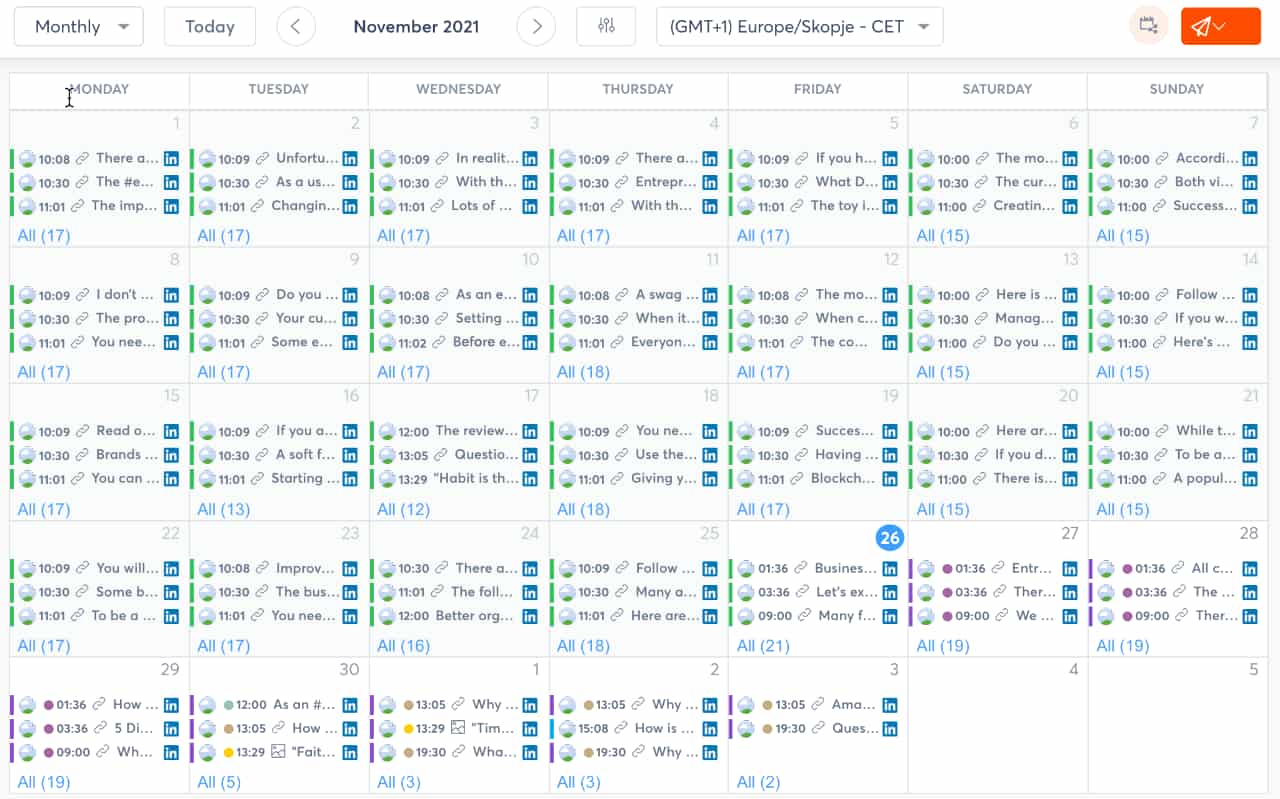
Now, with this information, you can start creating and scheduling your social media posts inside your content calendar in advance to ensure consistency and efficiency.

V. Collaborations and Partnerships
When we talk about social media marketing, collaboration is an important part of your success. Usually, I want to cover this aspect inside the social media marketing strategy, especially when it comes to collaboration with influencers and other departments inside the company.
Collaboration With Influencers
Influencer marketing, or collaborating with influencers, can significantly improve your brand visibility and credibility on social media.
Identify Influencer
Identify influencers who resonate with your brand values and engage your target audience.
When you partner with someone who shares your ethos, their endorsement feels authentic, making their followers more likely to trust your brand.
Reach Influencers
Once you’ve identified the right influencers, reach out to them to explore collaboration opportunities. This can take many forms, including sponsored content, product reviews, or even user-generated content campaigns.
Remember, the goal of these collaborations is to create genuine, relatable content that speaks to your audience. When influencers authentically share their experiences with your products, it builds trust and encourages their followers to check out your brand.
Collaboration With Other Departments
Working with other departments is key to a social media strategy. Engage with marketing, sales, and customer service teams so your social media fits with your overall goals and messaging.
Employee advocacy is another big part of your strategy. When your team members share your content and engage with your brand online, your reach and credibility increase. You can encourage this by creating a culture where employees feel comfortable sharing their experiences and opinions.
I worked with a tech startup to implement an employee advocacy program. We ran training sessions on social media, and employees started sharing their good experiences with the company’s products. Social media campaigns grew the brand’s reach and credibility with customers.
VI. Define Clear Roles for the Implementation of Social Media Marketing Strategy
The last part of your social media strategy is to define the roles and responsibilities of your team members to implement. This includes tasks such as content creation, posting, commenting and messaging, metrics analysis from one side, and defining the roles of your team members in implementing such tasks.
Make sure to define these roles so all team members know what they are responsible for and can work towards the goals of your social media strategy. Here are some of them:
1. Social Media Managers
This person will manage the entire social media strategy and will be responsible for creating an overall plan that fits your brand’s marketing goals. They will monitor performance, analyze data, and adjust as needed.
2. Influencer Managers
Collaborating with influencers has become a common tactic for many businesses to reach new audiences on social media. Having an influencer manager on your team will help you find and connect with the right influencers for your brand, negotiate partnerships, and manage campaigns.
3. Social Media Strategists
A social media strategist will create an overall plan for your brand’s social media presence. They should have knowledge of the different platforms and their algorithms and be up to date with the latest trends and best practices. Their expertise will make sure your brand’s social media strategy meets your goals.
4. Community Managers
The community managers will be responsible for engaging with your audience on social media, commenting and messaging, and building a community around your brand. They should have good communication skills and be able to handle any customer service issues that may arise.
5. Content Creators
The content creator will create content for social media, text, images, videos, and other visual elements. They should know your brand’s tone and voice and be up to date with the latest social media trends.
6. Analysts
This role will track and analyze data from social media platforms to measure the performance of your campaigns and make informed decisions for future strategies. They should be able to use analytics tools and know the key metrics such as reach, engagement, and conversions.
7. Advertising Specialists
If you plan to run paid social ads on your social media strategy, having someone for this role is a must. They should have experience in creating and managing ad campaigns on different platforms and know how to target and budget.
8. Graphic Designers
Visual content is key to standing out on social media, so having a graphic designer on your team will help you a lot. They should be able to create eye-catching graphics and videos that fit your brand’s aesthetic and messaging.
9. Copywriters
Good copy is key to grabbing your audience’s attention on social media. A good copywriter on your team will make sure all your posts, captions, and ads are engaging and communicate your brand’s message.
You can assign multiple roles to the same person if you have a small business with limited resources.
How to Measure Success with Social Media Analytics?
At the end of the day, we always need to recapitulate what we achieved that specific day. The same thing is true with social media marketing. What is something that helped you achieve your social media goals? What is something that is not bringing results?
To respond to such questions, you must measure your success on social media. Let’s go through some important things here:
Use Social Media Analytics
To effectively measure your success on social media, it’s essential to use analytics tools that track your performance. These tools provide valuable insights into how well your content resonates with your audience.
Monitor Key Social Media Metrics
Next, keep a close eye on important metrics such as website traffic, engagement rates, and conversion rates. These figures can help you understand what’s working and what isn’t. You can start with reach and engagement levels.
Reach indicates how many people see your posts, while engagement measures how actively your audience interacts with your content.
For example, I once consulted for a local cafe that posted daily updates on their social media accounts. By analyzing their engagement metrics, we discovered that posts featuring behind-the-scenes content received significantly higher interaction rates. This insight allowed them to improve their content strategy and connect more effectively with their audience.
Related: How to Develop a Content Marketing Strategy in 9 Steps: From Start-to-Finish Guide + Template
When I helped a local restaurant improve their social media presence, we monitored how many diners came in due to online promotions. By linking a unique promo code to their social media posts, we tracked a 20% increase in foot traffic from their social channels.
Use Data to Inform Strategy
Data-driven decisions are key to refining your social media strategy. Once you have gathered enough insights from your analytics tools, take time to analyze the information and identify trends.
For example, if you notice that video content garners more engagement than static images, consider increasing your video posts.
Adjust Your Strategy
Based on the analytics data you collect, be prepared to adjust your strategy. If a specific type of post is getting more engagement, consider creating similar content. By adapting your content strategy to focus more on videos, we were able to boost their overall engagement significantly.
Set Up Tracking Pixels
Another critical step in measuring your social media marketing success is setting up tracking pixels for your ads. These small snippets of code help you understand how well your advertisements perform and track conversions from your social media campaigns.
Stay Informed on Trends in Social Media Game
Finally, to stay ahead of the competition, keep yourself updated with the latest social media marketing trends and best practices. Follow industry leaders and read up on new features offered by social media platforms. I have found that platforms regularly evolve, and leveraging new features can set you apart.
So, keep your focus on the trends of your targeted audience as well as the trends of the sector you are in. Keeping the social media marketing strategies for your target group up to date will not only genuinely keep them engaged on a day-to-day basis but will also send a clear message that you are not falling behind with the recent trends. That way, your brand will gain recognition, increase brand awareness, and establish itself as a stable and insightful market player.
Social Media Strategy Template
I would like to share a template that will give you the foundation for the creation of a successful social media strategy. As you have seen, developing social media strategies requires analysis and a systematic approach to social media team and task development.
As I explained above, you can have six important parts inside your strategy for each social media channel.
I. Social Media Goals

In the social media goals sheet, you can write down what business objectives you want to achieve with your social media marketing activities.
II. Define Your Target Audience

Without targeting the right audience, your social media marketing efforts will not bring the results you expect to achieve. In this part of the social strategy template, you should describe each segment category through their demographics, interests, and preferred social media platforms.
III. Analyze Competitors and Social Media Networks

On this sheet, as a part of a social strategy template, you will need to identify several of your biggest competitors, find and write about their strengths and weaknesses, and identify the social channels they are using. Using the analysis we explain above for each platform, such as active users, goals, platform’s features, etc., in combination with what your competitors already use, you will be able to select the most appropriate platforms for your business.
IV. Create a Content Strategy

Now, you will define the content type for each platform, the frequency of publishing, the platform, and the person responsible for it.
V. Collaborations and Partnerships

You can use this sheet of the social marketing strategy template to record identified partners, type of collaboration, benefits that your business will achieve after successful collaboration, and contact information for each potential partner.
VI. Define Clear Roles for Implementation

Effective social media marketing will require the implementation of activities that your strategy will cover. Why would you spend your time developing a strategy that will not be implemented?
So, here, inside the strategy template, you must define clear roles for all social media activities that your strategy will require to be implemented.
You can download this Google Sheet template here (make a copy).
In conclusion
All in all, your social media strategy shouldn’t be fixed. Don’t be afraid to experiment, change, and take a moderate amount of risks. Be creative, keep your audience engaged, and always try to bring something more and something fresh to your brand image. This will not only help you establish a recognizable image for your brand but will also secure you a stable and reliable audience long-term.