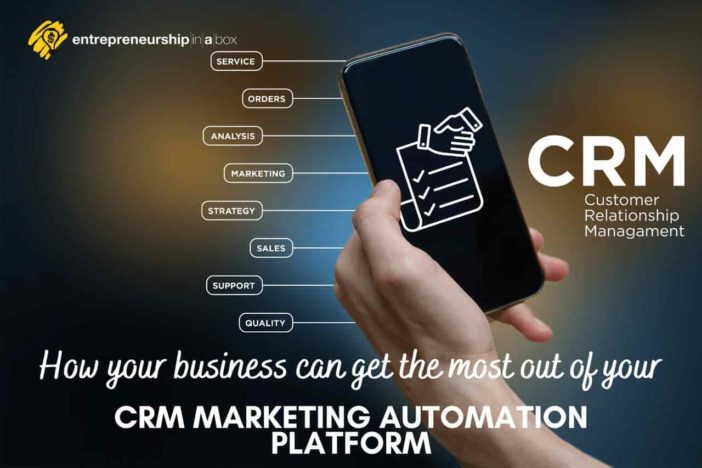
Over the past few years, CRM and marketing automation has been the trend to watch for many businesses. However, some businesses haven’t been using the platforms to their maximum potential. Very few truly understand how the platforms can transform their businesses.
Well, if you’re operating a business and are looking for ways to optimize its operations, CRM marketing automation can be the solution you’re looking for. But just having the platform is not a guarantee to realizing marketing success in terms of more leads and deals closed. Perhaps a few tips on how you can get the most out of your CRM marketing automation platform is enough to keep you moving. Please read on.
1. Let Your Platform Be the Center of Your Marketing Strategy
Using the platform to develop your marketing campaigns can be very vital for the progress of your organization. It’ll provide you with crucial insights on the best approaches to different markets together with essential tactics to implement. The automation system will enable you to approach your prospects in the most efficient way possible.
With a good platform, you’ll be able to identify the most interactive market and the products that are on-demand and also the channel that gets the most traffic. You can compare marketing automation tools to help you find one that best suits your business needs.
2. Allow for Proper Automation
Your marketing team must perform several tasks in order to ensure positive results for the business. Some tasks may be too complicated to be solved effectively without applying some automation. Processes of determining the leads with enough engagement to proceed to sales and to actually pass the leads to sales can be very challenging and overwhelming to proceed manually. This is why you need to integrate your marketing automation platform and CRM system for convenient results and to allow for the automatic solution of these processes.
However, you’ll need to have a native integration to allow for true automation lest you’ll be forced to handle some tasks manually. It’s very common to have some leads having a lag time between when they’ve been ready for sales and when they’re identified by sales. Native integration allows you to automate the entire process and this will give you technological access that will save you the hassle of having to spend time doing things manually – it’s error-prone. You’ll, therefore, have time to focus on other important projects meant to improve your business.
3. Train All Your Employees
Working alone without involving your employees in your plans can hardly give you the results you need out of the CRM marketing automation platform. Involving your employees means training them on how to effectively utilize the marketing automation system. This calls for the need to identify and train those employees who are eager to understand the system. You’ll then make a schedule of the mastermind sessions to train the employees on how they’ll train other employees concerning the effective utilization of the CRM automation platform for positive results in the organization.
This way, you’ll be able to encourage all the employees towards achieving a common goal. And there’s no powerful thing than when people work together towards achieving a common goal.
4. Ensure Better Reporting
Reporting is very vital for your business. It allows you to identify what you’re doing well, what you need to apply some improvement, and generally how your operations are progressing with time. Currently, a lot of marketing teams are focusing on performance-based KPIs and this requires accurate and timely reporting. This is where CRM-marketing automation integration can come in handy. Normally, you’ll realize its importance in two ways.
Probably this is the most important thing you will get from your CRM system. You need to know what brings you the results, and what not. You want to become part of a continuous improvement process when it comes to the marketing tactics you are using.
First, the reporting is automated to save you from spending weeks poring through different information to determine ways to better the operations of your organization. Second, it’ll allow you to connect the happenings on the marketing side with those on the sales side. This will give you a full picture of what’s going on. You can track engagements with your website, content, or emails. So you can follow leads in all of their entire lifecycles to enjoy an accurate attribute pipeline movement to marketing.
5. Automate All the Basic Processes
Gaining traction with your prospects may not be something you accomplish in a single day. Rather, it requires a lot of input and time. However, you can bring an end to such hassles through a CRM marketing automation tool. You’ll only need to set your platform to complete different tasks for you such as call scheduling and automated emails for new and returning clients. This automation can enable you to enjoy services of automated lead rotation which allows you to assign tasks evenly.
The auto-creation of tasks and deals is yet another innovation that can be vital to your business. This innovation focuses on shortening the administrative work and enabling agents to concentrate on their key purpose – to sell.
6. Sync Your Platform to Essential Tools
Are you using your CRM to its maximum potential? For instance, does it automatically import all of your client-related interactions and sync with your calendar? If not, you need to get yourself a CRM automation marketing platform. The platform that can support such and other related customer interactions. Ensure that your platform supports such interactions automatically without you having to double-enter them and to keep the interactions yourself. You need to have a system that you can trust to accurately and effectively perform its tasks.
The system should be able to schedule an appointment with your prospect. It must be done from any of your calendars – smartphone, Google, or Outlook calendars. The system should then send the prospect an invite. Then thereafter makes a note and record the event with the client. You should also ensure to link your platform to your Enterprise Resource Planning (ERP) solution. This will enable a fully automated inquiry management process for all your prospects.
7. Embrace Customization
Perhaps a majority of your customers are bound to meet you for the very first through your CRM. This is where you need to ensure you create a lasting and impressive first impression. The CRM should reflect the face of your business through your support team. The customers should be able to clearly have an opinion on who you are and what you do.
To ensure that you deliver cohesive and consistent services throughout your interaction with the customers and to meet their expectations, you need to follow through with your automation process with the strategy of your brand. The automation process, through ensuring a seamless user experience and improving the navigation, will also prevent frequent conflicts that could arise.
8. Ensure Sales-Marketing Alignment
Over the years, there has been a clear difference between marketing and sales which has been quite difficult to overcome. However, this can be significantly overcome with CRM marketing automation platforms. These platforms can help bridge this gap by creating a single source of truth for the purposes of reporting. Also improving accountability, and making communication between sales and marketing teams more seamless.
Integrating the marketing automation platform with the CRM system puts your business in a better position to enjoy all these and related benefits. This will also enhance accurate and timely data transfer.
9. Keep the Customer Data Updated
Perhaps you’d want your CRM to successfully nurture contacts, right? If yes, you’ll need to consider updating their data on a regular basis. Having a complete record of each of your clients with you ensures that you’ll not waste time looking for the contact’s intelligence when your relationship is finally on. Ensuring the data is updated will give you time to concentrate on other important projects such as closing the deals. This update ensures that you keep in line with the desires of your customers and this will make them realize that you appreciate them – which is very vital to earn their loyalty.
10. Use Your CRM Metrics to Gather Business Intelligence
You’ll need a good CRM marketing automation platform to enhance your customer relationships, which goes a step further to provide you with valuable insights into the health of your business. This means that if you invest in a good system, the aggregation of your customer intelligence will be in a single source of truth. The platform will allow you to pull out and analyze different behavioral patterns, relate different causes, agents, and channels to determine the best solution to your business problem.
You’ll need to take advantage of the platform’s adaptive sales enablement which will not only allow you to evaluate the expectations of your prospects but will also guide you on the best way to approach different target groups. A good platform offers a wide range of KPIs – such as lost opportunities, email click-through rates, and average response rates – which you can use to measure the effectiveness of your customer engagement. That’ll be vital to get more leads and close more deals.
11. Use the Platform to Reward Good Work
While CRM platforms are mainly for enhancing customer relationships, a good platform is also vital for impacting internal communication handling. As the platform tracks communications – involving the customers and agents receiving their requests – you’ll be able to evaluate and reward the performance of your agents. The task distribution is automated and this enhances your customers’ satisfaction. The prospects will impact the assignment of requests and the tasks they’re comfortable with.
Conclusion
When it comes to getting the best out of your CRM marketing automation platform, you need to understand how to best utilize the platform. This will help you to transform your organization into a powerful entity. These are some of the most essential ways you can implement to take your business to the next level. However, you’ll require some patience since you won’t achieve the results you want overnight. Ensure to also implement them properly to enable you to generate more leads and, perhaps close more deals. This way, nothing will prevent you from business success. You can also look out for other relevant themed blogs to learn more about how the CRM marketing automation platform can impact your business.