10 Proven Ways to Generate Lead for Your Business

10 Proven Ways to Generate Lead for Your Business

You’re always looking for ways to generate more leads and grow your business. And while there are hundreds of ways to go about doing this, you can save yourself time and trouble by following proven steps.

But generating leads can take time, especially for businesses starting from scratch. They need to find innovative ways to reach potential customers and convince them of the value of their products or services.

📖 Key takeaways

  • Every business needs a steady flow of leads to survive and grow. Understanding how lead generation works is crucial.
  • The lead generation process involves attracting prospects, capturing their contact information, nurturing them through targeted campaigns, and ultimately converting them into customers.
  • Fortunately, several proven strategies can help businesses generate more leads. Start generating leads today by following the proven steps outlined in this article.

Introduction to Lead Generation

Lead generation is the foundation of any online marketing strategy. At its heart, lead generation is the process of getting people interested in your offer, product, or service and turning that interest into sales. This is especially critical for B2B success, as over 30% of B2B sales take one to three months to close, requiring a consistent and strategic approach.

lead generation system

Effective lead generation strategies are designed to pull in people who are already looking for solutions to their problems. By providing relevant information and offers, you can guide those prospects to your business, nurture their interest, and move them closer to a purchase. To improve lead generation, you should focus on understanding buyer personas and their problems, ensuring your strategies align with customer needs.

Whether you’re a small business or a big company, understanding lead generation is key to starting to build a steady stream of qualified leads and growing your product or service.

In today’s digital world, online lead generation strategies focus on pulling in potential customers through valuable content and offers and then capturing their contact information, usually through a web form or sign-up page.

Good online lead generation is essential for your business success as it allows you to attract and convert leads through digital channels. Simply, online lead generation is a core digital marketing activity using strategies and tools like SEO, content marketing, and paid advertising to reach and engage your audience.

Also, a lead generator, whether a tool or a method, can help you pull in and capture high-quality potential customer information to feed your sales pipeline.

What is the Lead Generation Funnel

The lead generation funnel is a visual representation of the journey your potential customers take from first discovering your business to ultimately making a purchase. A lead generation funnel consists of three stages: top of the funnel (TOFU), middle of the funnel (MOFU), and bottom of the funnel (BOFU), each designed to guide prospects closer to conversion.

At the top of the funnel, you capture lead information from a broad audience who may have just become aware of a problem or need. As these leads move through the funnel, your content and offers help them develop a clear understanding of how your product or service can address their needs.

Not every lead will make it to the bottom of the funnel—only a small percentage will become paying customers. That’s why it’s important to nurture leads at every stage, using targeted content and personalized communication to build trust and demonstrate value.

The lead generation funnel typically starts with awareness, moves through interest and consideration, and ends with conversion.

linear sales funnel

However, today, the multistage and cyclical lead generation process looks more like this:

cyclical sales funnel

Related: How to Build Your Own Lead Generation System

Effective Lead Magnets

A lead magnet is a powerful tool for generating leads directly from your target audience. It’s an incentive—such as a free resource, exclusive content, or special offer—designed to encourage potential customers to share their contact information with your business.

You must remember that the most effective lead magnets must address your audience’s specific pain points and show how your product or service can provide a solution.

To create a compelling lead magnet, identify the challenges your target audience faces. Then, develop content that offers real value, such as ebooks, webinars, whitepapers, free trials, or case studies.

For example, if you offer project management software, you might create a video series on project planning tips or share success stories from satisfied clients.

The key is to ensure your lead magnets are relevant, actionable, and tailored to the needs of your potential customers, helping you build trust and generate qualified leads for your business.

lead generation example

10 Strategies for Effective Lead Generation Process

Now, let’s look at some of the most effective lead generation strategies you can use to generate leads for your small business:

1. Optimize Your Website for Lead Generation

To generate more leads for your business, it’s important to start with one important and impactful online lead generation strategy (the hub for your business in the online world).

You must optimize your website to make it as user-friendly and intuitive as possible. This means reviewing your site content, layout, and design so visitors can easily find the information they’re looking for.

Here, creating optimized landing pages is crucial, as these dedicated pages are designed to convert visitors by aligning with your CTAs (Call-To-Actions) and advertising campaigns. Ensure that on each of your landing pages, you have incorporated a specific lead form that will help you capture leads efficiently by collecting prospect information directly. Asking for only essential information in lead capture forms reduces friction and can improve conversion rates.

You can also experiment with different forms of marketing, such as SEO, PPC, and social media ads, to see which marketing channels are most effective for your business. These marketing channels help drive traffic to your website and capture leads.

Drive Traffic to Your Pages

Driving traffic to your website is an essential part of lead generation, and search engines can play a key role in this process by helping prospects discover your content and become Marketing Qualified Leads (MQLs), Sales Qualified Leads (SQLs), and Product Qualified Leads (PQLs).

MQL vs SQL vs PQL

When discussing traffic, it’s important to focus on search engine optimization, which improves your website’s visibility and attracts organic traffic from search engines. Additionally, content marketing is vital for providing relevant content that attracts, engages, and nurtures visitors throughout the sales funnel. Identifying the right keywords for content creation is key to effective lead generation through search engine optimization (SEO).

Feedback Mechanisms

As a part of the lead generation tools you will use, consider conducting user testing to get feedback from your target audience and identify any areas of improvement for your website. This can be a success when you work with an SEO agency that can help you achieve great results for your lead generation campaign and website.

With the right tools and strategies in place—including an active Google Ads account for effective keyword research and campaign setup—you can generate more leads for your business and grow your customer base over time.

Related60 B2B Lead Generation Tactics and Strategies

2. Invest in Online Advertising

Online advertising is one of the most efficient and effective ways to help you start to generate leads for your business. You can reach many potential customers quickly and easily by placing ads as part of your lead generation campaign on popular websites. And since people are increasingly using the internet to find information about products and services, online advertising is a great way to connect with your future customers who are already interested in your offer.

There are many different platforms for online advertising, and not all of them are created equal. Selecting the right platform based on your target audience and your budget is a really important thing that can make a difference. Some popular options include Google Ads, Facebook Ads, and LinkedIn Ads.

These platforms offer you specific lead-gen tools and features, such as integrated lead forms, that allow you to generate leads directly within the platform. Running lead gen campaigns on these channels can simplify your process of capturing user information and improve your overall lead acquisition strategy.

Related30 Places to Find Prospects & Leads for Your Business

3. Launch a Referral Program

Another great way to generate leads for your small business is by launching a specific referral program. Simply, this means asking your existing customers to share information about your business with their friends and family as a lead generation process.

Not only does this help you reach new potential customers, but it also shows your existing customers that you appreciate their business and want to reward them for their loyalty. Referral programs are highly effective for acquiring new leads and engaging potential leads who may not have heard of your business before.

When setting up your referral program, it’s important to make the terms of your offer as clear and appealing as possible. Consider offering discounts or coupons for referrals, or giving customers a small financial reward for each new customer they bring in.

4. Host Webinars and Online Events

Hosting webinars and online events is another great way to generate leads for your business. These lead generation campaigns in the form of events allow you to engage directly with your potential customers, providing them with valuable information about your products and services while also building trust and credibility. Plus, they are a great way to reach customers who may not be familiar with your business but are interested in the topics you cover.

Webinars are especially effective for capturing lead information through registration forms (lead form), which can be used to collect important details about webinar attendees that you can later use for lead scoring. They can also play a crucial role in your lead qualification process, helping you qualify leads by assessing their engagement and responses during the event.

Attendees who show strong interest or take specific actions—such as asking questions, requesting demos, or exploring product features—can be identified as marketing qualified leads, sales qualified leads, or even product qualified leads, depending on their behavior.

This structured approach to lead qualification ensures you focus on the most promising qualified leads and optimize your sales efforts.

The key is to find a format that works for your business and your audience. Some businesses host webinars or online events regularly, while others will hold a one-time event to announce the launch of a new product or service.

You can also experiment with different formats, such as live presentations, pre-recorded videos, or live interactive discussions.

5. Social Media Platforms

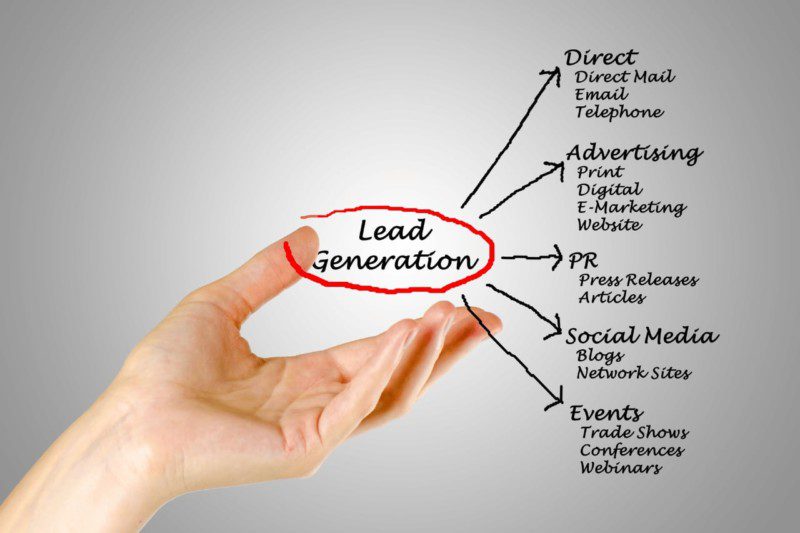
Social media platforms are another great way to generate leads for your business. These platforms can help you reach a wide audience of potential customers and provide valuable opportunities to connect with prospective customers on a more personal level and build trust.

However, identifying your target market is crucial to ensure your social media efforts are focused on attracting the right prospects. By understanding your target market, you can adjust your content and messaging to attract better-qualified potential leads.

You should focus on specific social media platforms depending on your business and your target market.

For example, many businesses find Facebook and LinkedIn excellent platforms for generating leads, while Instagram is a popular choice for B2C businesses in the fashion or beauty industries.

Targeted marketing campaigns on these platforms can help you attract high-quality leads and improve your lead gen results. Additionally, social media is highly effective for driving traffic to your website or landing pages, increasing the chances of lead capture.

RelatedHow To Reach Your Target Audience And Sell Your Product
6. Partner with Other Businesses

What is Partnership Marketing

Partnering with other businesses is another great way to generate leads for your business. Business development activities, such as forming strategic partnerships, not only expand your reach but also help you better understand your customers’ needs through shared insights and collaboration.

With strategic partnerships, you can tap into a wider network of customers and gain valuable exposure for your brand. These partnerships can introduce your business to new potential clients who may not have been aware of your offerings. Plus, you can offer products or services that complement each other, making it easier for potential customers to find what they need from your business.

Co-marketing allows businesses to leverage each other’s audiences for lead generation by creating shared content strategies.

If you are engaging in B2B partnerships, keep in mind that complex decision-making processes often require adjusted strategies and close collaboration to effectively nurture and convert leads.

To find the right partner, start by researching companies in your industry with similar values and target market. Then, see if they’re interested in collaboration with you on new projects and promotions.

You can also establish partnerships with local businesses or organizations, such as schools and non-profit organizations, to tap into their existing networks of customers and build your brand visibility in the community.

Related: Effective Partnership Marketing Strategy for Business Growth

7. Offer Incentives and Rewards

To get more leads for your business, you can offer incentives and rewards to customers who sign up for your mailing list or give you their contact details. These lead generation tactics require more upfront investment than the above-mentioned ones. But they are a great way to build your customer base and get valuable insights about your customers. By using incentives, you are actively generating your own leads rather than relying on external sources.

When talking about incentives, you can offer various incentives and rewards such as gift cards and discounts on future purchases, or enter contests or sweepstakes. Make sure the incentives are relevant to your target audience and aligned with your business goals.

For example, if you’re a local retailer selling children’s clothing, you may want to offer birthday-related incentives to get parents to shop for their kids.

Offering rewards can also increase customer satisfaction and encourage referrals, build trust, and enhance your reputation. Incentives can also move prospects further down the funnel, turn them into sales leads, and increase your chances of closing deals.

8. Use Email Marketing

Design Email Marketing Campaigns

Email marketing is another effective way to generate leads for your business. By sending regular updates about your products or services via email, you can keep your potential customers engaged and make it easier for them to find the information they need.

When creating emails to send to your mailing list, focus on providing valuable content that appeals to your target audience and aligns with your business goals.

You can also use email marketing to collect valuable customer feedback, such as reviews or ratings, and find out what content your audience is most interested in. This information can help you customize your email campaigns and improve the effectiveness of your lead-generation efforts over time to capture more quality leads. Email marketing is a powerful tool for nurturing leads after initial capture to maintain engagement over time.

Aligning your email marketing efforts with your sales teams is also essential to ensure seamless lead nurturing and handoff. Collaboration with the sales team is crucial for evaluating and converting leads into customers. Email marketing supports the sales process by nurturing leads through the sales cycle, helping you to guide prospects from initial interest to final purchase.

Related: How to Design a Perfect Email Marketing Campaign?

9. Use Technology for Lead Generation

Today’s lead generation can not be imagined without technology. Businesses have access to many lead generation tools that make capturing, qualifying, and nurturing leads a breeze.

Marketing automation platforms can deliver personalized content at scale so every lead gets the right message at the right time. On the other side, AI-driven lead generation tools can analyze user behavior and preferences so you know what content resonates and which leads are most likely to convert.

Lead scoring is especially powerful, so you can prioritize leads based on engagement and likelihood to become a high-quality lead. By focusing your sales team on the most promising prospects, you can improve lead quality and conversion rates. A lead scoring system allows you to assign a numeric value to leads based on criteria, making it easier to identify and prioritize the most valuable opportunities.

10. Measure and Optimize Your Lead Generation Efforts

To ensure your lead generation strategies drive real results, measuring and optimizing your lead generation efforts regularly is crucial. Key metrics like Return on Investment (ROI) and cost-per-lead help you evaluate your marketing campaigns’ effectiveness and identify improvement areas.

Cost per Lead - CPL

By tracking these metrics, you gain a clear understanding of which tactics are generating the most valuable leads and which need adjustment.

Regular analysis of your lead generation process allows you to refine your approach, improve conversion rates, and drive revenue growth. So, use data-driven insights to test new ideas, optimize your lead capture forms, and adjust your messaging to better resonate with your target audience.

If you continuously measure and optimize your lead generation efforts, you’ll stay ahead of industry trends and ensure your business remains competitive in a rapidly changing market.