



We live in an incredible economy that gives entrepreneurs the opportunity and freedom to spread their wings and fly. However, no matter how ingenious or unique your products and services are, you won’t fly far without a solid marketing plan that will include advertising. So, here I want to discuss how to make a good commercial for your small business.
You must grab the attention of your target audience and convince them that they need you. One way is by learning how to make good commercial ads that will attract new customers and encourage repeat business.
But with so many other small businesses, startups, and online entrepreneurs out there, how can you be sure to stand out?
📖 Key takeaways
- You must conduct market research to better understand your target audience and then create a video commercial that will resonate with them, using a clear message and compelling story to capture their attention.
- The preparation stage of the commercial production process is important. Plan and prepare thoroughly, from scriptwriting to logistics, to create a seamless production process that results in a memorable and effective video ad.
- Invest in high-quality visuals and sound to ensure your commercial video production looks professional and aligns with your brand’s image, improving viewer engagement. When you are satisfied with the end result, you can export your commercial from editing software, and it is ready to be published on advertising platforms.
The Basics of a Great Video Commercial
Creating a great video ad is all about effectively communicating your message and value proposition and resonating with your target audience. To achieve this, there are several key elements you need to consider:

1. Create a Clear and Concise Video Ad
First, ensure your message is clear and concise. Your audience should immediately understand what you’re offering and why it matters to them. Next, craft a compelling story that engages viewers and makes them want to learn more. A great video commercial often tells a story that evokes emotions and connects with the audience on a personal level.
2. Use High-Quality Visuals and Sound

High-quality visuals and sound are also crucial. Poor production quality can distract from your message and make your brand appear unprofessional. Invest in good equipment or hire a professional commercial maker to ensure your video looks and sounds great.
3. Create a Strong Call-to-Action
A strong call to action is essential. Encourage viewers to take the next step, whether it’s visiting your website, making a purchase, or contacting you for more information. Finally, maintain a consistent brand identity throughout the commercial. Your video should align with your overall marketing strategy and reinforce your brand’s image.
By incorporating these elements, you can create a video commercial that not only captures attention but also drives sales and builds brand loyalty.
How to Make Great Video Commercials: 6 Must-Know Tips
You must make a commercial that compels people to use your products or services by focusing on various contributing factors. There is a myriad of elements involved in creating video commercials.
Take a look at our top six tips.
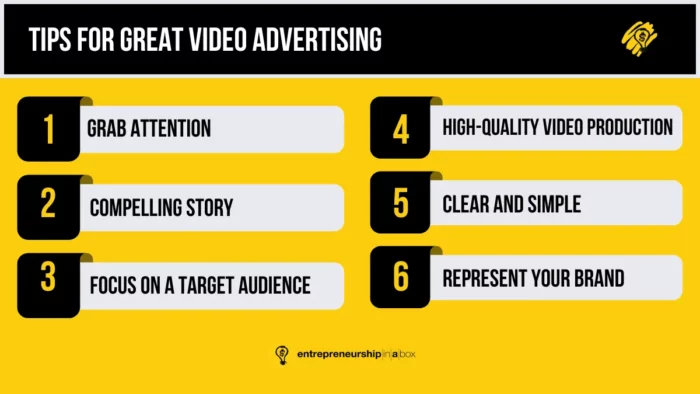
1. Your Video Ad Must Demand Attention
The digital age has given us immediate gratification in most areas of life. When we research information, shop online, or stream movies, we expect an instantaneous result.
However, this luxury has also lowered the average attention span. Your commercial, especially video ads, will have precious few seconds to captivate an audience and demand their remaining attention.
2. It Must Be Memorable with a Compelling Story
Learning to make a commercial means designing one that leaves a lasting effect, much like the most successful commercials. It may be an amusing song, a unique tagline, or messages that communicate the benefits your products and services will bring to your customers.
The key is to make sure viewers remember your brand, brand identity, and offerings and are thinking about you long after seeing your commercial.
3. It Must Focus on a Specific Target Audience
Many business owners make the mistake of believing everyone can benefit or wants to benefit from their business. The harsh reality is that the majority of consumers won’t care about your company. That’s why it’s ever-important to target your ads to a specific audience on various social media platforms.
Do so research into your industry to determine exactly what demographic of people comprise your target audience. This will help you learn how to create a good commercial that hits the mark.
A study demonstrates the use of machine learning to predict user engagement with video ads. This approach leverages user demographics and behavior data to refine advertising strategies, highlighting the importance of personalized content in retaining viewer attention.
4. It Must Be a High-Quality Commercial Video Production
When people visit a website, they can be turned away by negative user experience (poor layout, pixelated images, unintuitive navigation, etc.). Consumers expect quality. And a lack of quality in a website, ad, or commercial reflects poorly on the company.
Research from MIT indicates that the presence of people and early appearance in video ads enhance viewer engagement. Conversely, excessive text, especially when introduced early, can negatively impact view-related metrics.
This commercial video production company specializes in creating commercials with high-quality sound and video. They know how important it is to appear professional to prospective clients by using expertly edited video clips.
5. It Must Be Clear and Simple
Learning how to make a good commercial means starting with a clear video script. The harder your commercial is to understand, the less likely viewers are to pay attention or finish watching it.
A study from the University of Liège highlights that video length significantly affects perceived informativeness and entertainment. Shorter videos (around 15 seconds) tend to be more informative, while longer videos (over a minute) are perceived as more entertaining.
6. It Must Strongly Represent Your Brand
Lastly, an impactful commercial, especially when you create your own commercial, drives your brand and message home with no apologies. There should be no confusion as to what you do and why you do it. This part of the commercial is vital for branding your business as a company people want to or need to work with.
Related: How to Start With Video Marketing?
Commercial Making Plan and Preparation
Before you dive into creating your video commercial, thorough planning and preparation are essential. Start by defining your target audience and understanding their needs. Knowing who you’re speaking to will help you tailor your message and make it more impactful.
Here are some of the basic steps you must follow when you plan and prepare to shoot commercial ads.
1. Commercial video template
When you know your audience, you can create a commercial video template to guide your filming and editing process. This template should include the key components of a successful commercial, such as:
- an attention-grabbing opening,
- a clear message, and
- a strong call to action.
Additionally, consider the tone and style of your commercial. Will it be humorous or serious? Will it have an emotional appeal or be more informative? Think about your brand’s overall image and choose a tone that aligns with it.
Visuals, or creative assets, are also crucial in creating an effective commercial. Make sure to use high-quality recordings and images that accurately represent your brand and product or service. You can also incorporate animations or graphics to add visual interest and help convey your message.
2. Craft Your Commercial Script
After you create a clear and concise message that resonates with your target audience, ask yourself the following question: What do you want them to know, feel, and do after watching your commercial or online videos?
Once you have your message, create a storyboard and script that outline the commercial’s narrative and visuals. This will serve as a roadmap for your production.
The script is the foundation of your commercial, so take time to write a compelling and engaging one. It should be concise, clear, and memorable. Here are some tips for writing an effective commercial script:
- Start with a powerful hook. Your opening line should capture the viewer’s attention and make them want to keep watching.
- Clearly state your message. Make sure your audience knows what your commercial is about and what you are promoting. Use simple language that is easy to understand.
- Keep it short. Commercials are typically only 30 seconds or 1 minute long, so every word counts. Avoid rambling or using unnecessary information.
- Use persuasive language. You want to convince viewers to take action, so use words that create a sense of urgency or highlight the benefits of your product or service.
3. Logistics Plan
Plan the logistics of the shoot, including selecting the location, gathering the necessary equipment, and hiring talent. Make sure you have everything you need to bring your vision to life. Additionally, a budget and timeline for the project must be established. This will help you stay on track and ensure that you don’t overspend to make a commercial.
By planning and preparing, you can set the stage for a successful video commercial that meets your marketing goals.
Pre-Production
Pre-production is also an important stage in the commercial video production process. This is where you lay the groundwork for a smooth and successful shoot. Start by finalizing your script and storyboard. These documents should be detailed and clear, providing a solid blueprint for your commercial.
Next, cast the talent and hire the necessary crew members. Think about do you need to use professional actors, or you can hire other people or someone from your company to show your brand’s personality. Choose individuals who can bring your vision to life and who fit well with your brand’s image. Scout locations and secure any necessary permits. The right setting can enhance your commercial and make it more memorable.
Plan the lighting and sound for the shoot. Good lighting and clear audio are essential for a professional-looking video. Prepare all the equipment and test it to ensure it’s working properly. This includes cameras, microphones, lights, and any other gear you’ll be using.
By taking care of these details during pre-production, you can ensure that the actual shoot goes smoothly and that you capture the footage you need to create a video commercial.
Production (Make a Commercial)
The production phase is where the magic happens. This is when you capture the footage that will become your video commercial. Start by setting up the equipment and testing it to ensure everything is working properly. This includes cameras, lights, and microphones.
Follow the script and storyboard closely as you capture the footage. Take multiple takes to ensure you get the best possible shots. Don’t be afraid to experiment with different angles and approaches to find what works best.
Capture B-roll footage to add depth and interest to your commercial. B-roll can include shots of the product in use, behind-the-scenes footage, or anything else that enhances the main narrative. Take breaks to review the footage and make adjustments as needed. This will help you catch any issues early and ensure you’re on the right track.
By following these steps, you can capture high-quality footage that will form the foundation of your video commercial.
Post-Production
Post-production is where your video commercial comes to life. This is the stage where you edit the footage and add visual effects to create a polished final product. Start by importing the footage into your editing software and organizing it. This will make the editing process more efficient.

Create a rough cut of the commercial, following the script and storyboard. This is your first draft, so don’t worry about making it perfect just yet. Add visual effects, such as transitions and graphics, to improve the commercial and make it more engaging.
Incorporate music and sound effects to create an engaging soundtrack. The right audio can elevate your commercial and make it more memorable. Finally, finalize the edit and export the commercial in the desired format.
Following these steps, you can create a polished and professional video commercial that effectively communicates your message and drives sales.
Monitor and Learn from Your Video Content
Once your commercial is completed and published, monitor its performance and collect feedback from viewers.
You must track metrics like views, engagement rate, and conversion rate, which can provide valuable insights into what works and what doesn’t in your video marketing strategy.
You can also ask for feedback through comments or surveys to understand how your viewers perceive the commercial. This information can help you make improvements for future videos and create content that resonates with your audience.
Looking for More Advice?
Learning to make a commercial video can be difficult. Remember to put yourself in the position of the viewer. Imagine how you’d react to seeing the commercial as a third party.
Would you be intrigued? Would you be bored? Or would you appreciate the message?
If you’re looking for more entrepreneurship advice and information, we can help. Be sure to check out the rest of our articles before you go for some of the best business tips on the internet.


