Your skills as a team leader are essential in today’s business environment, especially when teams and their members typically handle the work. I previously wrote about managerial skills, then entrepreneurial skills, and now I want to cover some essential leadership skills that can help you build and run a successful business.
Many entrepreneurs ask me this question: What are the most critical team leader skills? How can they begin developing these skills to help them grow their businesses?
Because of this, I will try to answer these questions here.
Strong team leadership is possible only if you have strong business leaders with effective leadership skills. Figures like Steve Jobs and Howard Schultz demonstrate how unique traits and skills are vital for effective leadership.
Let’s examine your most crucial leadership skills as an entrepreneur.
📖 Key takeaways
- Today, no organizational form can function without strong teams, which can only be strengthened by strong leadership. Without leadership, your team cannot perform the work correctly.
- Effective leaders demonstrate important leadership qualities such as communication skills, critical thinking, and adaptability to navigate challenges and inspire their teams.
- Building trust and fostering a positive work culture through relationship building and conflict resolution are essential for enhancing employee engagement and business performance.
Understanding Leadership Skills
What are Leadership Skills
Leadership skills are the skills and qualities you have to lead, direct, and influence others to achieve a common outcome. These are relevant to all roles, including business, education, and community leadership. Leadership skills cover many competencies, including communication, problem-solving, decision-making, and strategic thinking.
Good leaders show leadership skills by inspiring and motivating their teams, making informed decisions, and navigating challenges with confidence. They can also communicate their vision, build trust, and create a positive work environment. Whether in a corporate, not-for-profit, or community group, leadership skills are key to success and progress.
Why Leadership Skills are Important in Business
Leadership skills are key in business as they help organizations achieve their goals, grow, and stay competitive. Good leaders with strong leadership skills can inspire and motivate their teams, build trust, and create a positive work culture. They can make informed decisions, navigate change, and drive innovation. In today’s rapidly changing business environment, leadership skills are more important than ever.
Good business leaders understand the importance of leadership skills in creating a cohesive and productive team. They use their skills to communicate effectively, delegate tasks, and resolve conflicts so their team members are aligned with the organization’s objectives. By creating a culture of trust and collaboration, leaders can increase employee engagement and drive business performance.
The 5 Cs of Successful Leaders

The 5 Cs of successful leadership summarize essential leadership qualities that contribute to effectiveness and success.
1. Character
Character is the foundation of every effective and successful leader. This includes leadership qualities such as resilience and the ability to adapt to an ever-changing environment. Integrity, honesty, and an ethical ethos are also essential. Leaders with character inspire trust and respect from team members, creating a positive, open environment.
2. Competence
Competence is the basis for a leader’s effectiveness. It is a high level of ability and knowledge to do one’s job. Competent leaders are good decision-makers and know how to lead their teams to achieve organizational goals.
3. Courage
Courageous leaders take risks and make tough decisions, even when everyone else is not on board. They encourage their teams to embrace change and explore new ideas. Creative leadership is a great example of this; it’s where you can see the power of thinking differently, which really leads to turning lemons into lemonade.
4. Commitment
Commitment requires leaders to be dedicated and passionate about their organization’s mission and its people. Truly committed leaders are relentless and persistent, helping their teams focus on the right long-term goals.
5. Communication
Communication is another huge one. It’s important to be able to convey information and create a culture where people feel comfortable sharing ideas and asking questions. Leaders who communicate well make sure their team members are informed and aligned with the organization’s goals.
1. Leadership Visionary

When faced with challenging decisions, leaders must engage in strategic thinking and apply critical thinking skills.
This approach ensures that leaders in leadership positions can efficiently manage their teams, align their efforts with the company’s goals, and achieve desired outcomes.
We cannot expect a powerful team leader without a strong vision and not any type of vision but a shared vision for the future.
With this skill, visionary team leader implements visionary leadership in their teams.
What does this mean?
They simply know how to communicate their vision to other organizational members, and in such a way, their vision becomes a team’s vision.
Related: The Team Effectiveness Models and Different Roles in Teams That Win
Leadership Roles and Expectations
Leadership roles and expectations differ by organization, industry, and specific job requirements. But some common expectations of leaders are to:
- provide vision and direction
- build and lead high-performing teams
- make informed decisions
- coach and mentor their employees
- communicate
- drive change and innovation
- build trust and credibility
- promote a positive work culture, etc.

I have seen some leaders understand these expectations and work to develop the competencies to meet them. They know their role goes way beyond managing day-to-day tasks and it is more about inspiring, motivating, helping, and guiding their team toward common goals.
Successful leaders can navigate challenges and drive their organizations toward success by continuously developing their leadership qualities.
Company’s Values and Goals
Effective leadership is about staying true to the company culture and goals. A leader needs to know the mission, vision, and values of the company extremely well and make sure that they are living those values and supporting those goals in every way possible. Here’s how:
- Explain the values and goals of the team and lead by example.
- Make decisions that support the goals and greater good of the company.
- Develop a company culture that reflects the values.
- Living the values yourself.
When you do this, you build trust with your employees, who will be much more engaged and willing to follow you. It’s not about setting a direction and telling people what to do and to follow you. It’s more about making sure everything you do moves the company forward and helps it achieve its purpose. When you do that, people are much more likely to be motivated and happy, and the company will perform well.
2. Human or interpersonal skills
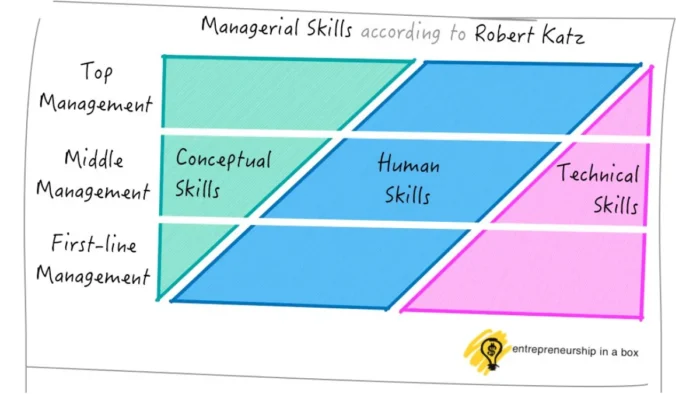
We can’t discuss leadership skills without mentioning the human side of organizations and teams or, better said, the interpersonal skills of the team leader.
This skill simply means that a team leader will know how to work with people. She is the team leader or leader of a group of people who form the team whose job is to do something in the business.
Team leaders must motivate their members to finish their jobs as well as possible. Relationship building helps leaders engage and motivate their teams, improving workplace morale and productivity.
However, if team leaders want to choose the best possible reaction, they must first better understand their organizational members’ different behavioral styles. These styles will require different actions and reactions from team leaders.
On the other hand, the best team leaders also know how, when, and to whom to praise in a team environment.
3. Listening Skills

Next, I want to mention listening skills as one of the most crucial team leadership skills. You cannot expect to be an excellent team leader without knowledge and the habit of listening to other people’s opinions. Active listening shows that you are empathetic and want to help your followers succeed in their daily jobs.
So, listening has become one of the most important functions in today’s modern organizations.
Before concluding, a good team leader first listens to their team members, and after an analysis of what they heard, they conclude or decide.
Related: Unlocking the Secrets of Effective Management Style
4. Innovation and Creativity

Innovation and creativity are crucial to any company, and successful innovation begins with ideation. However, innovation is not only about products, services, processes, or business models. As a manager, your role is to innovate and develop an environment where creativity and innovation thrive. I have already explained many different organizational change frameworks, and all of them also cover the importance of change leaders for the success of organizational changes.
So, creative leadership qualities are really important when discussing your overall management style as a leader. Why?
Because creative leaders think outside the box and encourage their teams to be innovative and forward-thinking, a creative mindset is open, not closed or rigid, and produces ideas and solutions that are both significant and effective. With this quality, you will manage your business by fostering an environment where new ideas can grow.
Because teams exist to solve problems, and solving problems requires a high level of creativity from all members, a good team leader must have creativity-related skills.
They need to use their own creativity to solve problems and encourage other team members to be more creative when working in a team environment.
Another important point is that today, companies are more based on collaboration than individualism. Collaboration helps good leaders achieve results because it increases innovation.
5. Strong Communication Skills as a Team Leader
Teamwork is something that requires everyday communication between the members.
The leader is responsible for enabling an effective communication environment in their teams because, without this, they cannot effectively manage the team members.
Today, simply everything is based on a good communication process. Look only at how you communicate, through what communication channels, and with whom. If you measure how much time you spend daily on work-related communication, it will be for sure more than 40-50% of all your time.
6. Organizational Skills
To be an effective leader, you must also have some organizational skills. Each team member must take responsibility for and contribute to the team’s work.
The team leader’s organizational skills will significantly affect the organization of the work process.
This means that you must plan tasks, delegate tasks, control the work progress, etc.
Related: 6 Steps Delegation Process to Increase Your Productivity as a Manager
7. Negotiation Skills
Negotiation is another essential leadership role involving a process where parties with different perspectives collaborate to reach a mutually agreeable solution.
This requires communication, critical thinking, and the ability to build trust, all of which are crucial for a successful leader in a managerial or leadership position.
Teamwork will produce different proposals, different directions, and different actions. They will accept something immediately, but some will slow down the team’s further work.
An excellent team leader will need to know how to negotiate and facilitate the process if she wants to succeed.
Related: How to Improve Your Negotiation Process?
8. Time Management Skills
Time management skills are also an important part of a team leader’s overall skillset because she will inevitably need to manage the time of the team members.
Good time management skills will increase teamwork and overall productivity.
You can use our guide to prioritize tasks with the time management matrix, which you can also find examples of.
9. Critical Thinking Skills
Critical thinking is another important trait of a good leader. This important skill involves framing, exploring, and making thoughtful decisions. Remember that critical thinking doesn’t just mean being a critic; it is a system of taking broken ideas, viewing them from an outsider’s perspective, and reconstructing them into a better path forward.
Creative thinking, even if it seems like it can not be learned. Still, it is a learned ability that requires rigorous questioning of ideas and assumptions, which is essential for great leaders.
By analyzing information to comprehend an issue or topic fully, leaders can employ critical thinking to overcome different challenges and effectively lead their teams toward achieving the company’s goals.
10. Decision-making and Adaptability
Decisions made by a leader play a crucial role in determining their success and that of their organization.
An effective leader must cultivate strong decision-making skills and possess the conviction to uphold his decisions.
On the other side, adaptability stands out as one of the most important leadership skills, enabling leaders to navigate a hyper-competitive business environment and adapt to external changes effectively.
11. Employee Motivation and Engagement
The ability to motivate employees is crucial for maintaining high levels of employee engagement. Innovative leaders know how to motivate their employees.
Conversely, motivated employees are more engaged, self-confident, and capable of developing innovative ideas that improve the company’s performance. Successful employee engagement, on the other hand, leads to better productivity and lower absenteeism.
One of the best leaders I have seen usually prioritizes ongoing education, nurtures team members, and creates a workspace that encourages open communication, delegation, and conflict resolution. These valuable leadership skills are essential for achieving organizational goals and driving success.
12. Conflict Management

Understand that conflict is an inevitable part of any business environment, and great leaders must be able to address and resolve it silently.
Conflict management is a critical leadership skill for maintaining a harmonious workplace and improving team performance. By developing these valuable skills, leaders can effectively manage conflict and, in many cases, prevent it from arising altogether.